
What Actually Happens at a Wine Blending Session
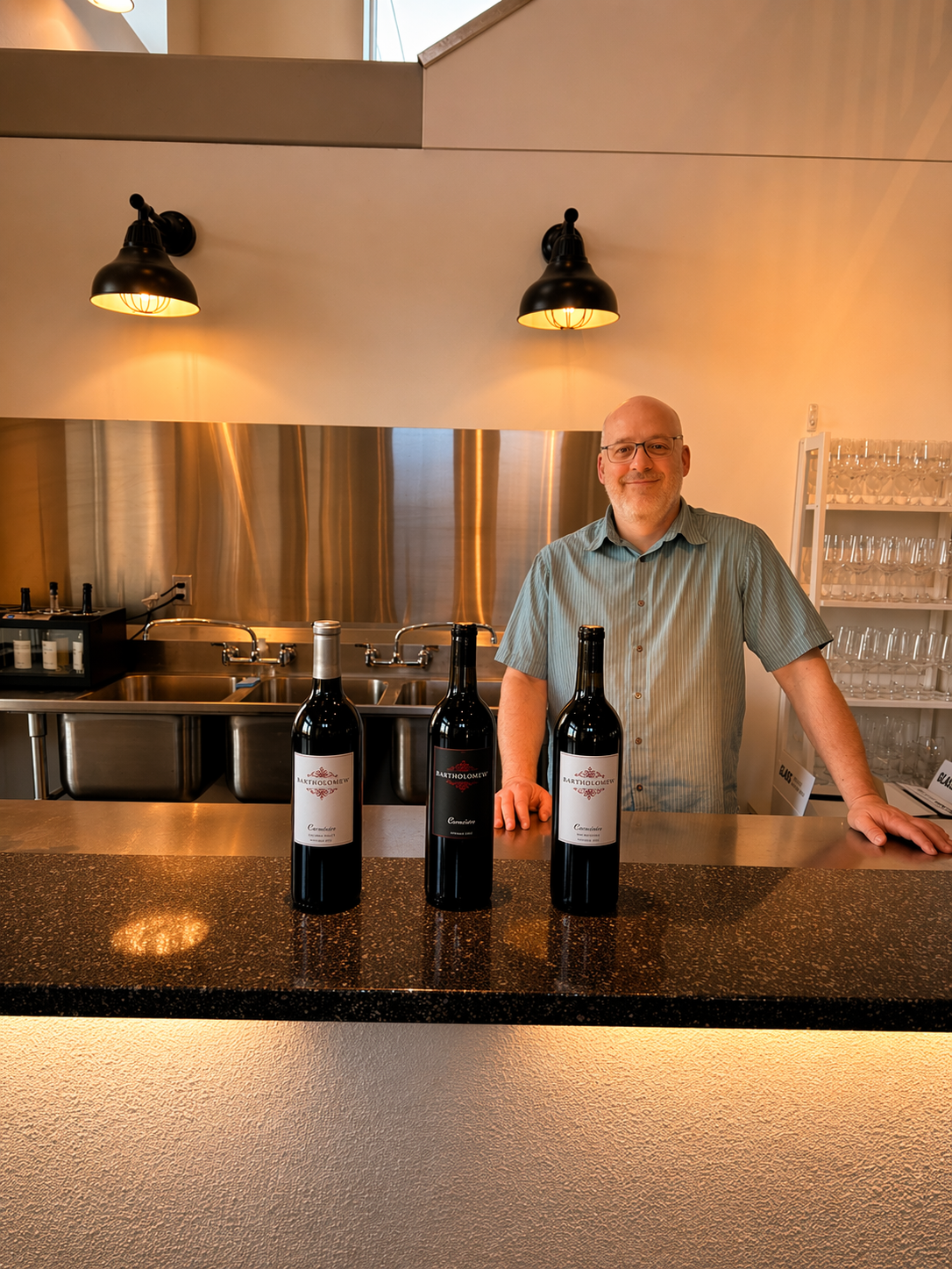
A candid shot of winemaker Bart Fawbush in the tasting room at Bartholomew Winery. He is standing behind the bar, immersed in the working cellar environment, ready to guide the conversation.
Bart stands behind the wood bar at Columbia Gardens with three unmarked glass decanters. He pours a few ounces of a deep purple wine into a glass and slides it across the counter. This is where a wine blending session starts at Bartholomew Winery in Kennewick.
We see a lot of people arrive expecting a lecture on soil types or a demonstration on how to swirl a glass. That is not what happens here. You are not sitting at a desk waiting for a grade. You are taking part in a wine blending experience inside a working winery.
We built CoVintner around the idea that the people drinking the wine should have a say in how it tastes. This process is about your palate and your preferences. You are here to build something that will later sit on your table with your name on the label.
The Mechanics of the Session
A common mistake is thinking you just show up and pick your favorite of three pre-made wines. That would be a standard tasting. In our sessions, you do not just taste and vote. You build and submit blend combinations that help shape the final wine.
We provide you with the building blocks of a vintage. This usually involves three different varietals or the same varietal from different vineyard blocks. Each one brings something different to the table. One might bring structure and tannin. Another might bring brighter fruit or spice.
You use graduated cylinders to measure precise percentages. You might try one blend, then adjust the ratio and try again. You record every version on your scoring sheet so your choices are clear and usable later.
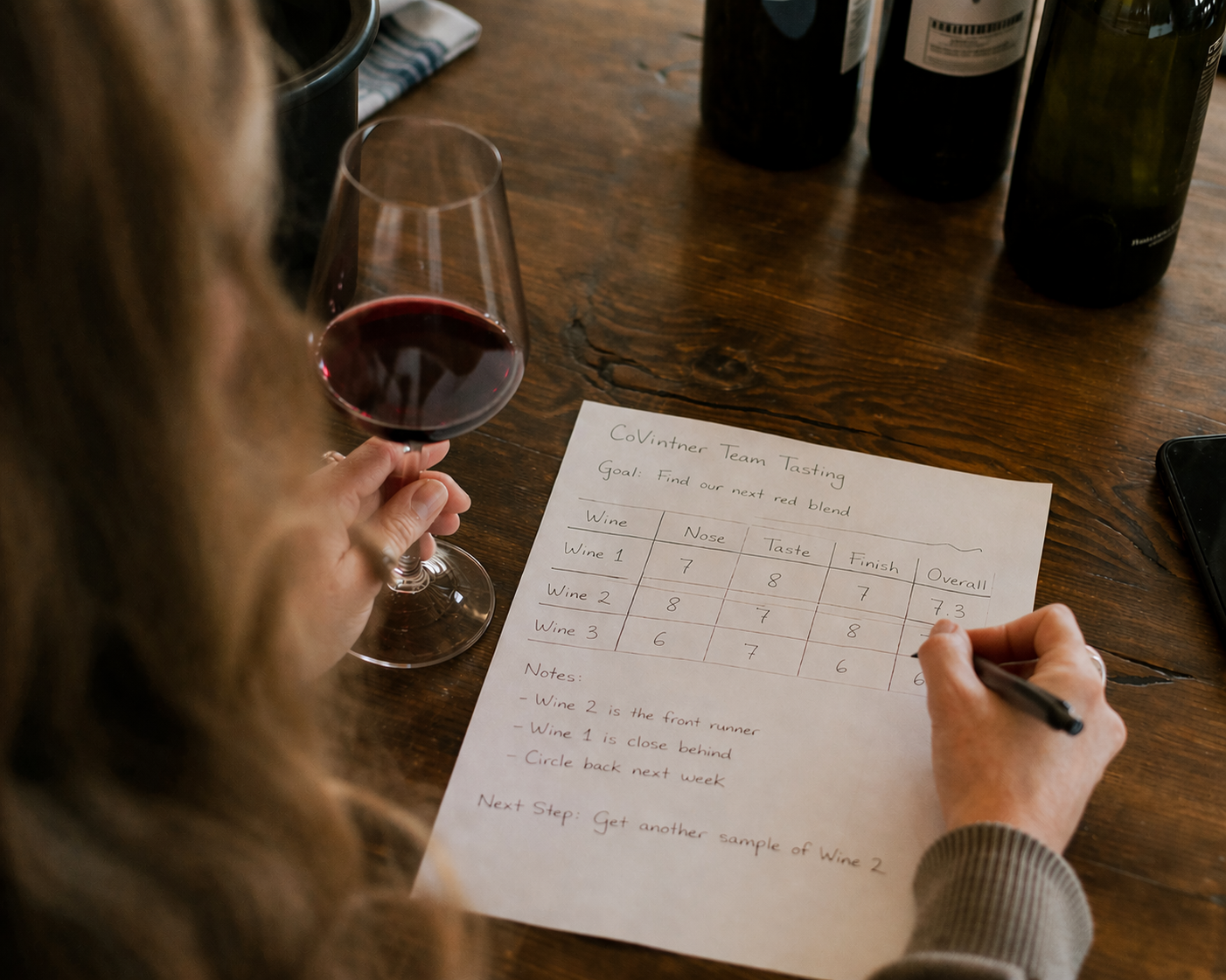
You score each attempt based on what you actually like. We ask you to pay attention to the aroma and the way the wine finishes. There are no wrong answers in these sessions. If you think a blend is too heavy, you change the ratio.
You are building and submitting blend combinations that Bart will later analyze to find the group consensus. That is a big part of what happens at a wine blending. It is hands-on, specific, and shaped by the people in the room.
Why This Isn't a Class
Traditional wine classes are passive. An expert tells you what you should be smelling. They explain why a certain region is better. You take notes and leave with a factsheet you will probably lose in your car.
A wine blending experience is more like a working meeting with a winemaker. There is no podium. There is no PowerPoint presentation. You learn by tasting, adjusting, and seeing what changes in the glass.
We skip the pretension. I do not care if you can identify wet stones or forest floor. I care if the wine makes you want another sip. That is what makes blend your own wine Washington feel more social and more grounded in real preference.
Meet the Winemaker: Bart Fawbush
The man behind the bar is Bart Fawbush. He did not start his career in a vineyard. Bart was a mortgage broker who decided to change his life after a trip to Woodinville. He is largely self-taught, which is part of why the room feels open instead of gatekept.
Bart moved Bartholomew Winery to Kennewick to be closer to the source. He works out of the Columbia Gardens Wine & Artisan Village. He is known for working with less common varieties that other winemakers often leave alone.
He has a particular affinity for Carménère. This grape was once thought to be extinct in Europe before being rediscovered in South America. In Washington, it can be savory and layered. It works well in a wine blending session because it gives people something distinct to work with as they build and submit blend combinations.
Closing the Loop
The work you do during the session does not disappear once you leave the winery. The votes from each group are tallied to shape the final blend. Bart takes the winning combinations and does the final integration in the cellar.
Your participation includes more than the session itself. You get to follow the process through to the end. Every member of the session gets their name printed on the back of the personalized labels. You also get to help choose the label design for the season.
The payoff happens at the release party, when you pick up your bottles and taste the finished wine. It is a good feeling to pour a glass for a friend and say you helped decide that blend. That is the part people remember long after the session ends.

Wine is purchased directly through Bartholomew Winery. CoVintner collects a participation fee only. These are two separate transactions. I keep it set up this way so the wine sale stays with the winery and CoVintner stays focused on the participation side of the experience.
Joining the Next Session
We have two blending sessions in Kennewick scheduled for April 25 and May 2. Each wine blending session is held at the Bartholomew Winery tasting room in the Artisan Village. We cap these events at 24 people so the room stays focused and unhurried.
That gives Bart space to move around the room and answer questions one by one. It also gives you time to experiment with your measurements without feeling rushed. If you want a wine blending experience that is active instead of performative, this is the format.
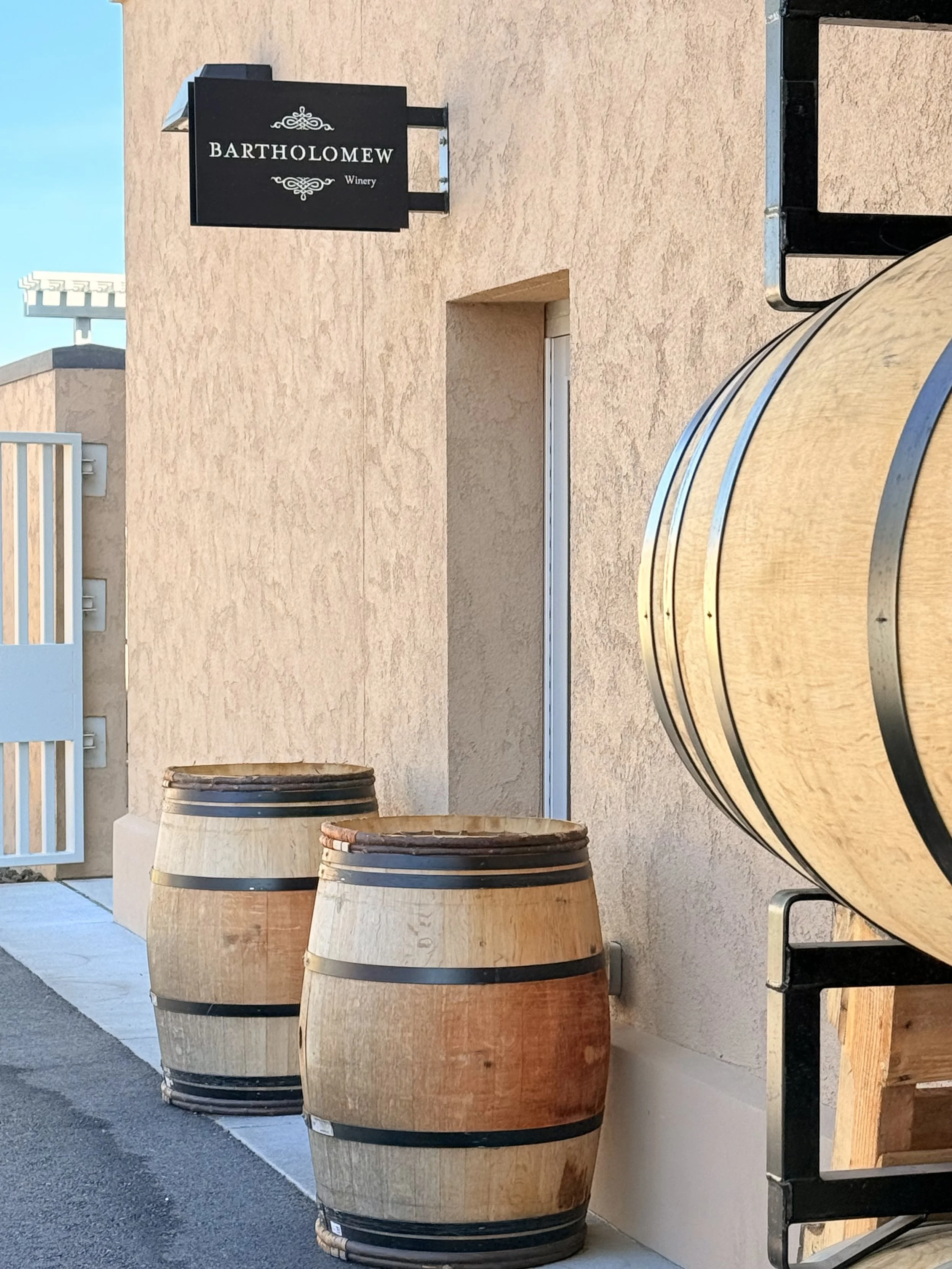
The barrels are ready. The decanters are full. We like that the final blend is still undecided when people walk in. It leaves room for your palate to matter.
We invite you to join us on April 25 or May 2 for the Carménère experience. We are keeping these sessions small with only 24 seats available per date. You can see what is left and sign up on our Barrel 1: Carménère page.
Wine is purchased directly through Bartholomew Winery. CoVintner collects a participation fee only. These are two separate transactions.
