
The Washington Winemaking Experience Where You Decide the Blend
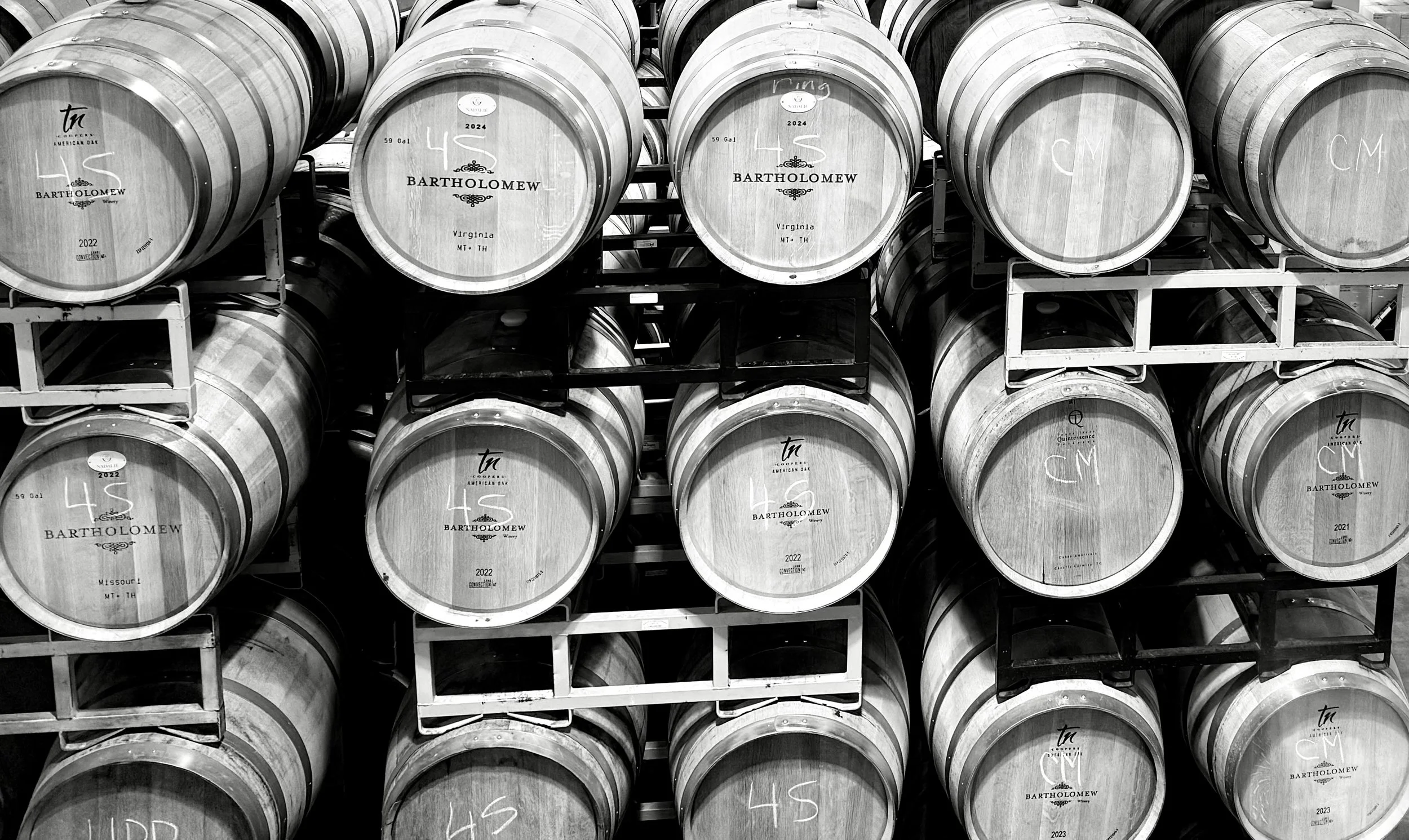
A black and white rendering of a snapshot of stacked wooden wine barrels in the production facility at Bartholomew Winery. Each barrel is marked by vintage and varietal, highlighting the scale and industrial feel of the space where the blending happens.
We built Founding Circle for people who want more than a standard tasting. Abraham and I started CoVintner because we saw a gap in how people engage with Washington wine. In partnership with Bartholomew Winery at Columbia Gardens Artisan Village, we bring people into a real winemaking experience where they help decide what the final wine becomes.
We gather people in Kennewick for one reason: to make a final decision on a wine. We host this as a working session where your palate is the primary tool. We set the table and the context with Bartholomew Winery. You bring your vote.
When we started CoVintner, we noticed that many wine experiences leave people on the sidelines. We wanted to build something participatory. Here, the story has room to take shape in the room. The final chapter of the bottle happens with the people who will eventually pull the cork.
The setting in Kennewick
Bartholomew Winery sits in the heart of Columbia Gardens Artisan Village. The space feels like a working cellar. You see the barrels and the tanks. You hear the sounds of production. We wanted a place that stripped away the pretense that can follow wine around. The focus stays on the liquid in the glass and the people at the table.
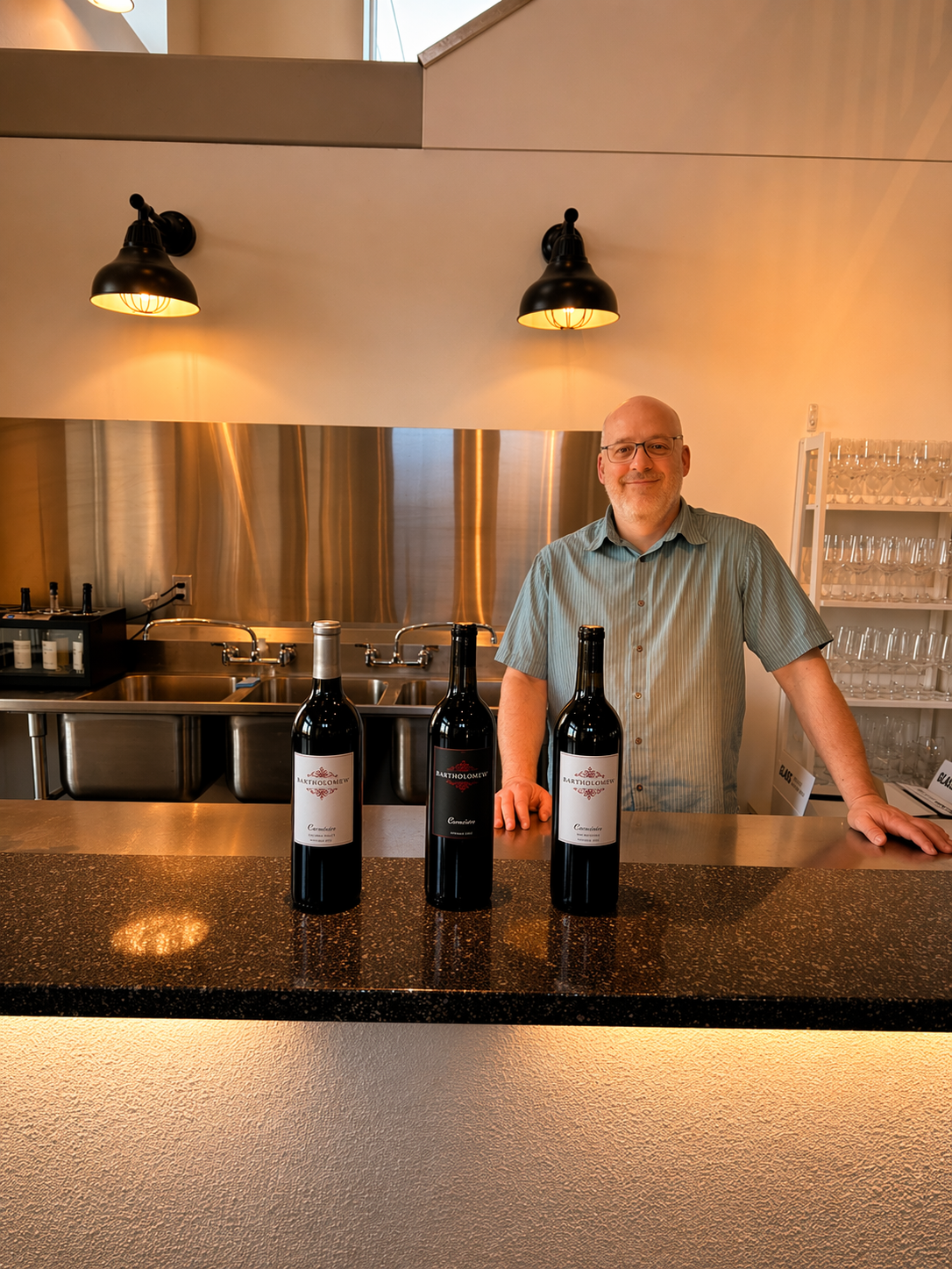
A candid shot of winemaker Bart Fawbush in the tasting room at Bartholomew Winery. He is standing behind the bar, immersed in the working cellar environment, ready to guide the conversation.
The atmosphere in Kennewick is deliberate. We are located right on the Columbia River waterfront. It is a corner of Washington where the industry is still tactile and accessible. When you walk into the winery, you step directly into a working environment where production, conversation, and tasting all happen side by side.
We chose this location because it reflects the transparency of what we do. When you are sitting alongside the stacks of oak barrels, you realize that wine is an agricultural product before it is a luxury good. It is about timing: it is about the specific chemistry of a single growing season. Being in the winery helps ground the experience in that reality. You are participating in a craft.
How we build a blend
When you arrive, the tables are set with samples and scoring sheets. We start with the base wine. For this season, that is Carménère. Building a blend is a process of trial and error. We take that base wine and introduce small percentages of other varietals or other vineyard sites.
Each addition changes the structure. It can shift the acidity or the way the fruit sits on your tongue. As a group, we taste these combinations side by side. You score each one based on your own preferences. There are no wrong answers here. We are looking for the blend that connects with the people who will actually be drinking it.
Carménère is a fascinating starting point. It is a grape with deep history and a very specific profile. It can be savory. It can have notes of green pepper or red fruit. By itself, it is excellent. But when we start introducing other grapes, we see the mid-palate fill out. Some grapes deepen the color, others make it more tannic adding bite and age-worthiness.
We watch the room during this phase. People start to notice things they didn't expect. They realize that a three percent change in a blend can completely alter the finish. This is the core of the winemaking experience. It is the realization that these decisions are intentional. You are seeing the "why" behind the bottle.
Casting the vote
After we taste through the candidates, we move to the voting phase. Every participant submits a preferred candidate for the final tally. The winning blend becomes the official wine for the season. This is the point where your input becomes something physical. Your name goes on the label as part of the group that shaped the bottle.
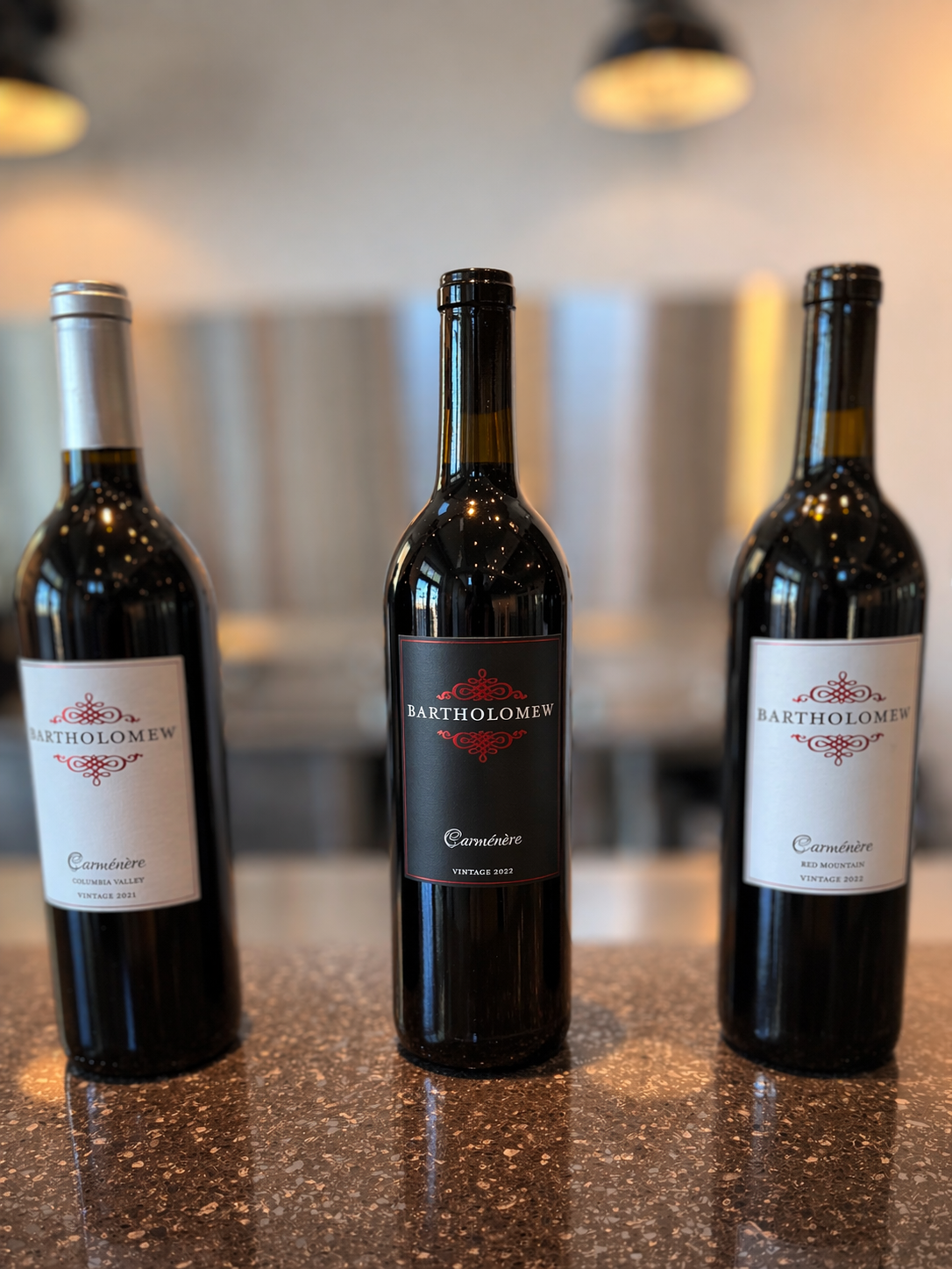
Three bottles of Bartholomew Carménère wine displayed on a polished counter. The labels highlight different Washington terroirs and vintages.
Bart Fawbush, the winemaker behind Bartholomew Winery, sees this as a natural extension of his work: "The Carménère is in a good place right now. What we do at the blending sessions is take where it already wants to go and make a final call together. I'm looking forward to seeing what the group decides."
This democratic approach is what sets Founding Circle apart. We make room for the blend decision to happen in the open, with the group and the winemaker in the same conversation. We trust your palate. We believe that the collective preference of a group of enthusiasts leads to a wine that is more interesting than one made in a vacuum.
When the vote is tallied, there is a visible shift in the room. There is a sense of ownership. You aren't just buying a bottle of Bartholomew Carménère. You helped build it. That connection stays with you every time you see that label on your shelf. It is a reminder of the two hours you spent debating the merits of acidity and tannin with a group of new friends.
The label and what makes it personal
One part of Founding Circle matters long after the tasting is over: the front label is fully customizable. That gives people room to make the bottle feel personal, or useful, or both. A group of friends can name the wine after an inside joke or a shared place. A company can use its team name, event title, or brand identity on the front label and turn the finished bottle into something that actually reflects the people who made it.
That detail changes how people think about the bottle. It becomes a marker of who was in the room and what the group made together. For teams, that can mean a bottle tied to an offsite, a client thank-you, or a milestone worth marking. For social circles, it can be the kind of gift people keep, open together, or bring back out later and remember exactly how the blend came together.
We like this part because it gives the final wine a second life. The session itself is collaborative, and the label carries that forward. The back label stays standard for compliance, but the front is where your group can leave its own mark.
Joining the session
These sessions are capped at 24 people to keep the conversation manageable. We have two dates remaining for the spring: April 25 and May 2. Both run from 11am to 1pm.
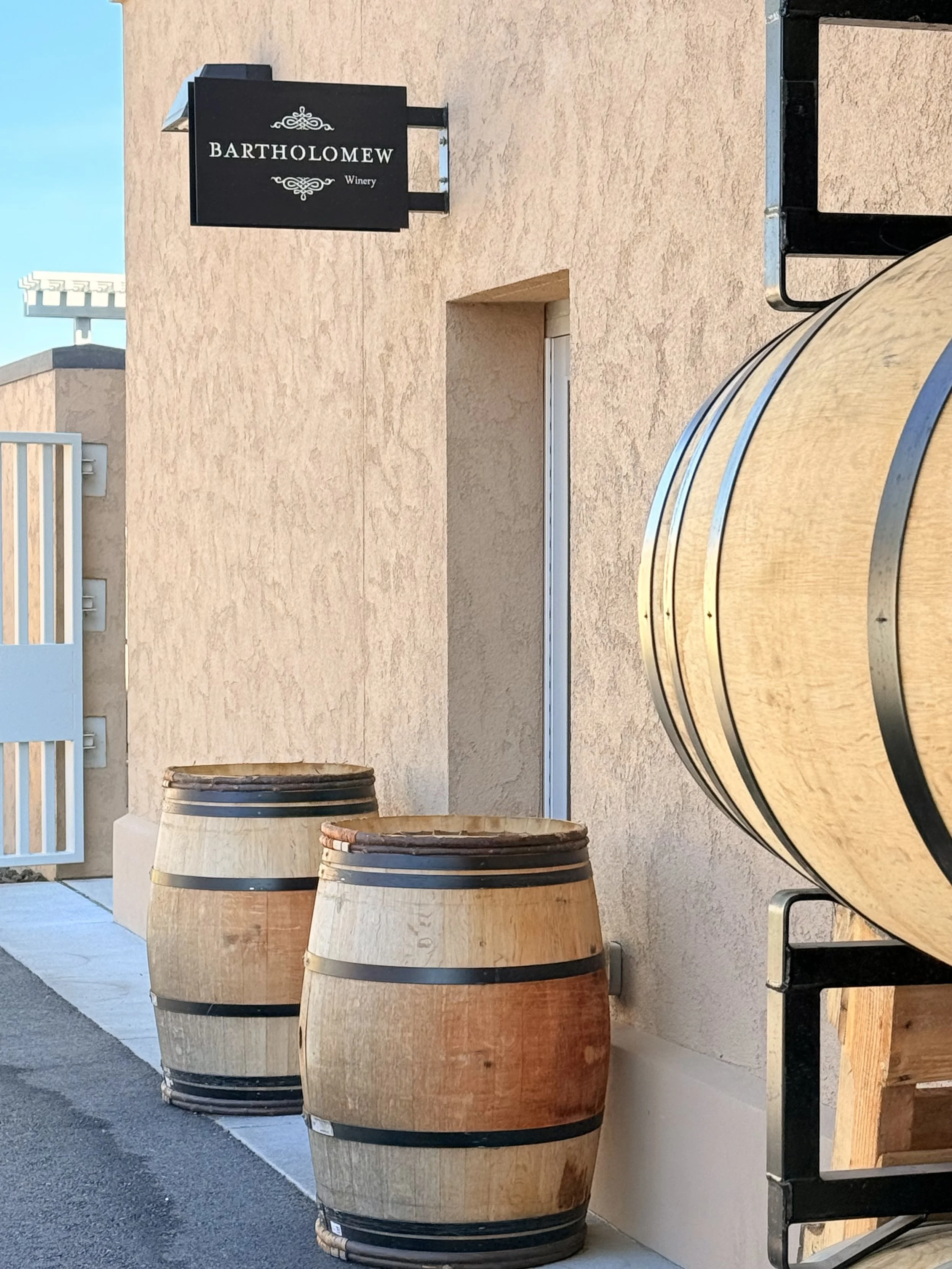
A photograph of three oak wine barrels standing outside the entrance to Bartholomew Winery at Columbia Gardens Artisan Village, marking the entrance to the collaborative winemaking experience.
We welcome people with all levels of wine knowledge. We ask that you come with curiosity and a willingness to share your opinion. This winemaking experience is social as much as it is technical. You will spend two hours tasting, debating, and deciding. It works especially well for teams, friend groups, and other social circles that want a gift or outing with more substance than a standard dinner reservation.
We keep the groups small for a reason. We want everyone to have the space to speak. We want you to be able to ask Bart questions about the barrel aging or the vineyard sources. The social friction is what makes the final blend better. That is also why it works as a group bonding format. People leave having made a real decision together, not just attended the same event.
We designed this for people who want a more open and grounded way to engage with wine. We take the mystery out of the process while keeping the craft intact. It is about honest conversation and better wine.
Wine is purchased directly through Bartholomew Winery. CoVintner collects a services fee only. These are two separate transactions. This structure keeps the winemaking and the experience clearly defined.
19 seats remain across two sessions. Enrollment is open at covintner.com/pilot.
